
MLB Strikeout Props: Analyzing Pitcher K-Totals
 Available in US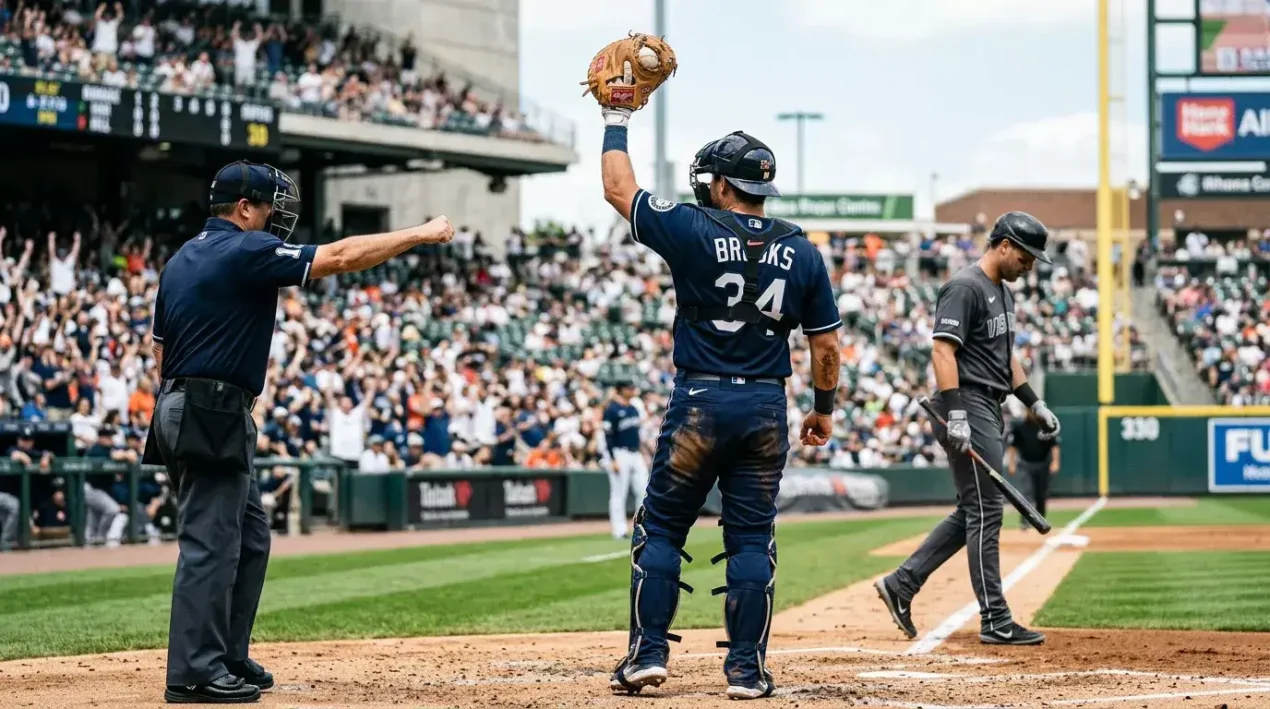
K-Rate Metrics: How Umpire Zones and Lineups Affect K-Totals
If I were forced to pick one MLB prop market to bet for the rest of my life and abandon all others, I would pick pitcher strikeouts. Not because the edges are biggest there – they are not – but because the market is the cleanest. The bet is binary, the inputs are well-defined, and the bookmaker’s pricing models are good but not perfect. There is a recognisable shape to where the line tends to be slow, and a disciplined bettor with a notebook can find consistent CLV across a season.
Compare that to other pitcher props. Pitcher’s earned runs allowed is messy because it depends on bullpen support, defensive plays, and luck-driven sequencing. Pitcher’s wins as a prop is essentially meaningless given the dependence on lineup support and bullpen quality. Pitcher’s hits allowed muddles in defensive positioning. Strikeouts, by contrast, are decided entirely between the pitcher and the batter at the moment of the swing. The defence does not get involved. The umpire is involved on called strikes but the pitcher’s whiff rate on swings is what mostly drives the total.
The strikeout total prop reads simply: Over or Under the bookmaker’s set line for total strikeouts recorded by a specific starting pitcher in tonight’s game. The line is usually quoted in half-strikeout increments – 5.5, 6.5, 7.5, etc. – to eliminate pushes. The pricing on either side typically sits between 1.80 and 1.95 decimal, with the bookmaker carrying about 4-6% vig.
How books set the K-line
The K-line starts from the pitcher’s career and recent strikeouts per nine innings (K/9) rate, scaled to the expected innings tonight. A pitcher with a career K/9 of 10.0 averaging roughly 6 innings per start would carry a base K-total expectation of (10 × 6) ÷ 9 = 6.67 strikeouts per start. The bookmaker rounds to either 6.5 or 7.5 depending on the matchup.
The modifiers come from the opposing lineup’s K-rate (how often the opponents strike out as a team), the umpire’s strike zone tendency, the park, and the weather. A high-K pitcher facing a high-K lineup at a pitcher-friendly park with a wide-zone umpire might see his K-line set at 7.5 or 8.5. The same pitcher facing a low-K contact-heavy lineup at a hitter-friendly park with a tight-zone umpire might see his K-line set at 5.5 or 6.5.
The bookmaker’s pricing is reactive to recent results in a way that is sometimes exploitable. A pitcher coming off two starts in which he was pulled early (low innings totals, low K counts) will see his K-line set conservatively for his next start – even if the early pulls were matchup-driven and tonight’s matchup looks more favourable. The market gives some weight to recent K-counts that may not reflect skill changes, just situational variation. Spotting that disconnect is where K-prop edge often lives.
The vig on K-props is wider than on moneylines but tighter than on HR props. A typical UK book might quote Over 6.5 K at 1.83 and Under 6.5 K at 1.91, giving implied probabilities of 54.6% and 52.4% – sum of 107%, vig of 7%. Some books carry tighter; some carry wider. Line shopping across two or three books can save 2-3% on the effective vig over a season.
Opposing lineup K-rate as primary input
The single most powerful variable in K-prop analysis is the opposing lineup’s strikeout rate as a team. Some teams are aggressive, contact-oriented lineups that strike out 18-19% of plate appearances. Others are patient, power-oriented lineups that strike out 26-28%. The gap between facing a contact lineup and facing a power lineup can swing a pitcher’s expected K-total by two full strikeouts per start.
The bookmaker accounts for this, but the adjustment is often less than what the underlying data suggests. The model treats lineups as somewhat fungible – a pitcher’s K-rate adjusts somewhat for opponent quality but not always to the full extent. When a high-K pitcher draws a lineup whose K-rate is particularly bad, the K-line often does not adjust the full amount upward. The Over carries value.
The reverse case is equally important. A high-K pitcher facing a contact-heavy lineup is a setup where the K-line might still look attractive based on the pitcher’s profile, but the lineup matchup suppresses the K count materially. The Under often outperforms expectations in these spots.
A practical filter: I rank lineups by season-long K-rate quartile. Top quartile is “high-K lineup” (favourable for K-prop Overs). Bottom quartile is “low-K lineup” (favourable for K-prop Unders). Middle two quartiles are neutral. I focus my K-prop bets on the extreme quartile matchups because that is where the market mispricing is most likely.
Umpire strike-zone tendencies and weather effects
The home plate umpire is the single most underrated variable in K-prop analysis. Different umpires call materially different strike zones. Some are pitcher-friendly, calling more pitches at the edges as strikes. Some are hitter-friendly, calling more borderline pitches as balls. The difference between an extreme pitcher-friendly umpire and an extreme hitter-friendly umpire can move a pitcher’s K-total by a full strikeout per start.
Umpire assignment data is published before each game. The information is freely available but most casual punters never check it. For K-prop bettors specifically, the umpire profile should be one of the first checks: who is calling tonight’s game, and is their strike zone wider or tighter than league average? Wide-zone umpires give pitchers more called strikes on borderline pitches, which increases K-totals. Tight-zone umpires force pitchers to throw more pitches over the heart of the plate, which can either help (more contact-prone pitches) or hurt (fewer chase strikeouts) depending on the pitcher’s profile.
Weather matters less for K-props than for HR props but is not zero. Cold weather tightens grip on the ball, which can affect breaking-ball command. Pitchers who rely heavily on sliders and curveballs sometimes see their K-rates drop slightly in sub-50-degree conditions because the breaking ball does not move as sharply. The bookmaker’s model accounts for temperature, but the effect at specific extremes (sub-40 in April, mid-90s in July) is sometimes amplified beyond what the model captures.
Wind is essentially irrelevant for K-props. Strikeouts happen at the plate, not in the outfield. A pitcher’s K-total is the same whether the wind is blowing out at 20 mph or blowing in at 5 mph. This is one of several reasons K-props are cleaner to analyse than HR props.
Lineup injuries that quietly move the K-total
Lineups change between when the K-prop opens and when it closes. The opening line is based on the assumed full strength lineup. By an hour before first pitch, the actual lineup has been announced and injuries or rest days may have removed key contact hitters or replaced them with bench players who carry different K-rate profiles.
The two situations to watch for: a contact-heavy regular replaced by a power-hitting bench player with a higher K-rate (favourable for K-prop Overs), and a power hitter replaced by a singles-hitter (favourable for K-prop Unders). The K-line sometimes adjusts to these changes; sometimes it does not, depending on the bookmaker’s update speed.
The bigger structural lineup change is when an opposing team rests multiple regulars in a day-game-after-night-game. A “B lineup” with three bench starters can carry a meaningfully different K-rate than the regular nine. If the bench players skew toward higher K-rates (which is common, as bench players are often platoon specialists or power-over-contact bats), the K-prop Over becomes more attractive.
This is where the discipline of waiting for confirmed lineups before placing the bet really pays off. Pre-lineup K-prop bets are essentially blind on the lineup variable. Post-lineup bets are informed. The trade-off is that post-lineup pricing is sharper, because the market has incorporated the same information you have. The edge comes from spotting the lineup-driven mispricing in the brief window after the announcement and before the line fully adjusts.
For UK punters watching MLB from across the Atlantic, the lineup announcement window typically falls between 10pm and 11pm BST for night games. That is the window to watch the K-prop lines for movement and execute the bets that the analysis supports. The same window applies to hitter counting-stat props, which respond to the same lineup-driven information flow.
K-props as a discipline more than an art
Strikeout props reward exactly the kind of methodical approach that MLB betting rewards more generally. There is no glamour, no big-payout parlay potential worth chasing, no narrative-driven angle that catches fire on social media. There is only the daily routine: identify the high-K pitcher facing a high-K lineup matchup, check the umpire profile, wait for the confirmed lineup, compare the offered K-line to your own model, place the bet if the inequality points the right way, log the closing line, and move on. Across a six-month season the discipline accumulates into something measurable. Across a single weekend it accumulates into noise. The bettors who treat K-props as a consistent grind do well; the ones who pick a hot pitcher every other Friday and stake big do not. The market is patient, and it rewards bettors who match that patience.
What’s a typical edge on a K-total over?
On well-researched setups – high-K pitcher facing a high-K lineup at a neutral park with a wide-zone umpire – the typical edge on the Over runs 3-6% above break-even. That is not enormous but it compounds over a season of disciplined bets. Edges above 8% usually mean you have missed an injury or a lineup change.
How much do umpires actually shift the strike-zone?
The extremes shift the K-total by roughly a full strikeout per start. An extreme pitcher-friendly umpire (top decile) versus an extreme hitter-friendly umpire (bottom decile) is the largest single variable in K-prop analysis after lineup K-rate. The middle 80% of umpires are close enough to league average that the effect is mostly noise.
This material was created by the DiamondEdge team.
Related posts

MLB Betting and UK Tax: What Punters Actually Need to Know

MLB Public vs Sharp Money: Reading the Line Movement